


Surgical Tooth Extractions & Wisdom Teeth Removal
Safe, Comfortable Surgical Extractions in Auckland CBD
Tooth Extractions in Auckland CBD
If you need a tooth extraction in Auckland CBD, we’re here to help. At Apex Dental, we provide safe, gentle tooth extractions, including surgical extractions and wisdom tooth removal, with a focus on comfort and clear advice at every step.
Whether you’re dealing with ongoing tooth pain, swelling, infection, a broken tooth, or an impacted wisdom tooth, we’ll assess your tooth and recommend the best option — from saving the tooth (where possible) to removing it when extraction is the healthiest solution.
When is a tooth extraction needed?
A tooth may need to be removed when it is:
badly decayed and cannot be restored
cracked or broken beyond repair
infected and not responding to treatment
causing pain, swelling, or repeated abscesses
loose due to gum disease
overcrowding teeth (sometimes needed for orthodontic treatment)
an impacted wisdom tooth (common)
We’ll talk you through what’s happening, your options, and what to expect before anything is done.
Surgical extractions vs simple extractions
Simple tooth extraction
Used when the tooth is visible and can usually be removed in a straightforward way.
Surgical extraction
Used when the tooth is broken at the gum line, difficult to access, or impacted (common with wisdom teeth). Surgical extractions may involve gently lifting gum tissue and, in some cases, removing the tooth in sections for a safer, smoother result.
Wisdom teeth removal
Wisdom teeth usually appear at the back of your mouth during your late teens or early twenties. Often there is no room for them to ‘erupt’ (come through the gum) and the teeth fail to emerge properly. A wisdom tooth can erupt partially through the gum, or remain trapped below the gum – this is known as an “impacted” wisdom tooth.
Why don’t my wisdom teeth fit my mouth?
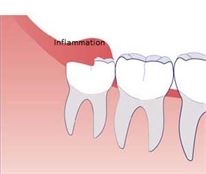
PERICORONITIS
Surgical vs. Simple Extractions: What Is the Difference?
At Apex Dental CBD, we prioritize natural tooth preservation whenever possible. However, when a tooth is severely compromised by extensive decay, deep root fracture, advanced periodontal disease, or painful impaction, extraction becomes necessary to relieve pain and protect adjacent teeth. Depending on the tooth’s position and condition, extractions are classified as either simple or surgical:
- Simple Tooth Extractions: Performed on fully erupted teeth visible above the gumline with straightforward root anatomy. Using specialized elevators and dental forceps, the tooth is gently loosened from the periodontal ligament and lifted out under local anesthesia with minimal displacement of surrounding tissue.
- Surgical Tooth Extractions: Required when a tooth cannot be easily accessed or removed with simple traction. This includes impacted wisdom teeth beneath the gumline, teeth broken down to the root tip, heavily restored teeth with brittle enamel, or roots anchored in dense jawbone. A surgical extraction involves creating a small incision in the gum tissue, gently lifting a mucoperiosteal flap, removing a minimal amount of surrounding bone, or sectioning the tooth into smaller pieces for safe, atraumatic removal.
Understanding Wisdom Teeth Impaction & Pericoronitis
Wisdom teeth (third molars) are the final adult teeth to erupt, typically emerging between ages 17 and 25. Because modern human jaws frequently lack sufficient space to accommodate these extra teeth, wisdom teeth often erupt at unnatural angles or remain trapped entirely within the jawbone or soft tissue (impacted).
Common Types of Wisdom Tooth Impaction:
- Mesial Impaction: The tooth tilts forward toward the front of the mouth, lodging directly against the second molar. This creates an inaccessible food trap, frequently leading to deep cavities on both teeth.
- Vertical Impaction: The tooth is positioned upright in the correct direction but cannot fully erupt through the gum due to lack of jaw space or dense bone coverage.
- Horizontal Impaction: The tooth lies completely on its side beneath the gums, pushing horizontally into the roots of neighboring teeth. Left untreated, horizontal impaction can cause root resorption, structural damage, or dentigerous cyst formation.
- Distal Impaction: The tooth tilts backward toward the rear of the jaw, making surgical access specialized but necessary when causing pain.
When a wisdom tooth partially erupts through the gumline, it creates a flap of overlying gum tissue (an operculum). Food debris and bacteria easily collect under this flap, leading to a painful localized infection known as Pericoronitis. Symptoms include severe throbbing jaw pain, swollen gums, foul taste, bad breath, difficulty swallowing, and limited jaw opening (trismus). Surgical extraction of the problematic wisdom tooth resolves the source of infection permanently.
Pain-Free Comfort & Anxious Patient Sedation Options
Patient comfort is our top priority. We understand that undergoing a tooth extraction or wisdom tooth surgery can cause nervousness. Our Auckland CBD clinic provides a relaxed, gentle environment supported by modern surgical techniques:
- Profound Local Anesthesia: We utilize advanced local anesthetics (such as Articaine with epinephrine) to completely numb the target tooth, gums, and surrounding bone. You will feel mild pressure during the procedure, but zero sharp pain.
- Conscious Sedation for Anxious Patients: For patients with dental anxiety, high phobia, or multiple complex wisdom teeth extractions, we offer oral conscious sedation and IV sedation options upon request to ensure a completely calm, stress-free experience.
- Micro-Surgical Traumatic Reduction: Dr. David Chen and our clinical team utilize precision instruments to minimize trauma to surrounding soft tissue and bone, dramatically accelerating post-operative healing and reducing swelling.
ACC Injury Cover & WINZ Dental Grant Assistance
Unexpected dental emergencies and surgical extractions should not create financial hardship. Apex Dental works directly with New Zealand support agencies to streamline your care:
ACC Dental Injury Claims
If your tooth was cracked or broken due to an accident, sporting impact, or physical injury, ACC co-funding can significantly subsidize your surgical extraction and follow-up treatment. We assist with instant claim lodgement on-site.
WINZ Emergency Quotes ($1,000)
Eligible domestic beneficiaries and low-income individuals can access up to $1,000 per year in non-recoverable emergency dental funding from Work and Income (WINZ). We provide instant itemized quotes on official letterhead for MyMSD submission.
Step-by-Step Post-Extraction Recovery & Care Guide
Proper post-operative care is essential for fast, comfortable healing and blood clot stabilization:
- Bite on Gauze (First 30–60 Minutes): Keep firm, steady pressure on the sterile cotton gauze pad placed over the extraction socket to encourage natural blood clot formation. Replace gauze if bleeding continues.
- Protect the Blood Clot (Crucial First 48 Hours): Do NOT rinse vigorously, spit forcefully, drink through straws, or smoke/vape for at least 48 hours. Negative pressure in the mouth can dislodge the blood clot, exposing raw bone and nerve endings—causing an extremely painful condition called Dry Socket (Alveolar Osteitis).
- Manage Swelling & Pain: Use cold ice packs externally against your cheek for 15 minutes on/off during the first 24 hours. Take prescribed or recommended pain relief (e.g., paracetamol or ibuprofen) as directed before local anesthesia wears off.
- Gentle Warm Salt Water Rinses (After 24 Hours): Starting 24 hours post-surgery, gently swish with warm salt water (1/2 teaspoon salt in a glass of warm water) 3–4 times daily after meals to keep the surgical site clean and promote tissue regeneration.
- Soft Food Diet: Stick to smooth, soft, cool foods for the first few days (yogurt, scrambled eggs, mashed potatoes, lukewarm soups, smoothies). Avoid hot drinks, spicy foods, hard chips, nuts, or small seeds that could lodge in the healing socket.
Frequently Asked Questions: Surgical Extractions
Q1: What is the difference between a simple and a surgical tooth extraction?
A simple extraction is performed on a visible tooth with straight roots using dental forceps under local anesthesia. A surgical extraction is required for impacted wisdom teeth, teeth broken below the gumline, or curved roots—involving a minor gum incision, bone contouring, or sectioning the tooth for safe removal.
Q2: Will I feel pain during a surgical tooth extraction?
No. We administer premium local anesthetics to completely numb the tooth, gums, and surrounding jaw tissue before starting. You will feel firm pressure as the tooth is gently removed, but zero sharp pain. Sedation options are also available for anxious patients upon request.
Q3: How do I prevent dry socket after having a wisdom tooth extracted?
Dry socket occurs when the protective blood clot in the extraction socket is lost. To prevent it, avoid spitting, rinsing vigorously, drinking through straws, smoking, or vaping for at least 48 hours following your extraction.
Q4: Can WINZ or ACC help cover the cost of surgical extractions?
Yes! If your tooth was damaged in an accident, ACC co-funding applies. For eligible low-income patients or domestic beneficiaries, WINZ provides up to $1,000 per year in non-recoverable emergency dental grants. We provide instant quotes for easy submission.
Q5: Where is Apex Dental located in Auckland CBD?
Apex Dental is located at Level 7, 9 Victoria Street East, Auckland CBD, 1010 (Lister Building, near the corner of Victoria St East & Queen St), just a 3-minute walk from Britomart Transport Centre.
*On request sedation options available
Looking for your dentist?
So call us today! We’ll take care of any toothache or gum problems.